
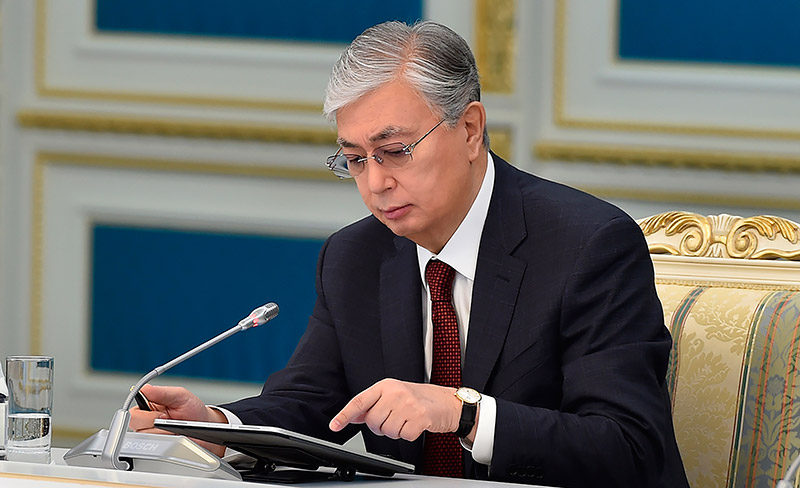
ASTANA: President Kassym-Jomart Tokayev has unveiled an ambitious nationwide construction and infrastructure modernization programme to improve living standards, strengthen regional development, and create hundreds of thousands of jobs, while stressing the need for strict oversight and timely implementation.
In his address to the people of Kazakhstan, titled “Kazakhstan’s Key Priorities in a New Historical Era,” Tokayev called for large-scale construction across the country, covering healthcare, education, transport, energy, housing and public utilities.
The initiative, named Halyqtyq Qurylys (People’s Construction), is expected to become the largest infrastructure programme in Kazakhstan’s history. The president proposed declaring the coming year the Year of Nationwide Large-Scale Construction, with projects extending to regional centres, districts and smaller communities.
According to the address, approximately 6.5 trillion tenge will be allocated from the National Fund for infrastructure modernization by the end of 2029. An additional 1.5 trillion tenge is to be earmarked for launching social projects during the remainder of the current year and the first two months of 2027.
Tokayev said the programme would prioritize essential public services and infrastructure. Around 70 healthcare facilities are planned across the regions, alongside approximately 50 educational, sports and cultural facilities. The programme also includes eight modern perinatal centres, seven multidisciplinary children’s hospitals and two additional medical facilities in Astana.
In his State of the Nation Address to the People of Kazakhstan President @TokayevKZ has set out a vision for the country’s next stage of development. The agenda: a competitive economy, modern infrastructure, accelerated digital transformation and higher living standards – building a Just, Strong, Clean and Progressive #Kazakhstan.
— Press Office of the President of Kazakhstan (@aqorda_press) October 28, 2026
The president stressed that infrastructure investment must deliver measurable economic and social benefits rather than simply increase public expenditure. He called for strict monitoring of construction projects, the selection of reliable companies and greater participation by domestic small and medium-sized enterprises.
Economic ambitions and regional development
Tokayev linked the construction drive to Kazakhstan’s broader economic transformation, arguing that modern infrastructure would improve the quality of life, stimulate entrepreneurship and support long-term economic growth.
Citing International Monetary Fund projections, the address stated that Kazakhstan’s gross domestic product could approach $400 billion, with GDP per capita exceeding $19,000. It also highlighted the manufacturing sector’s contribution, which has surpassed 14 percent of GDP, and combined gold and foreign exchange reserves and National Fund assets exceeding $130 billion.
The programme will extend beyond urban centres, with investments planned for rural infrastructure, clean drinking water, natural gas connections, housing and utilities. Tokayev also called for modern development plans for major cities and the use of digital models of urban infrastructure to improve resource management.
Transport connectivity is another central priority. The president highlighted railway and highway projects intended to increase freight capacity, shorten cargo delivery times and strengthen Kazakhstan’s position as a Eurasian logistics hub. He also called for the reconstruction of road border-crossing points and improvements to both national and local roads.
Implementation remains a key test
Despite the scale of the proposed investment, Tokayev acknowledged persistent shortcomings in infrastructure delivery and public administration. He criticized bureaucratic delays, the shifting of responsibility between government agencies and inconsistent road construction standards.
He instructed the government to assume responsibility for the quality of the entire road network and demanded effective coordination among ministries, regional administrations and implementing institutions.
The address also emphasized that public funding should attract private investment and support domestic production. Construction materials, metal structures and engineering equipment required for major infrastructure projects should, wherever possible, be manufactured within Kazakhstan rather than financed through imports.
These priorities place considerable responsibility on government institutions to ensure that allocated funds translate into completed facilities, reliable services and sustainable economic returns.
Beyond construction
The infrastructure initiative forms part of a broader national development agenda encompassing energy security, digitalization, agriculture, investment and public administration reform.
Tokayev called for Kazakhstan to achieve a sustainable electricity surplus by 2029, modernize existing power facilities and expand generation capacity. He also emphasized the development of renewable energy and nuclear power, alongside measures to improve energy transmission infrastructure.
In agriculture, the president advocated long-term financing for farmers, greater use of artificial intelligence, modern agricultural machinery and improved water management. He also called for a more coordinated system to attract investment and measures to strengthen small and medium-sized enterprises.
The address further highlighted the need to control inflation, increase household incomes and modernize public administration through digital technologies and artificial intelligence.
Delivering tangible results
Tokayev presented the construction programme as a long-term investment in human capital, economic competitiveness and the well-being of future generations. However, its success will depend on effective project selection, transparent spending, coordination between government bodies and the ability to complete projects on schedule.
By emphasizing accountability and measurable returns, the president signalled that the initiative must go beyond ambitious announcements to produce practical improvements in citizens’ daily lives.
The scale of the programme offers Kazakhstan an opportunity to modernize its infrastructure and strengthen its economic foundations. Its lasting impact, however, will ultimately be determined by how efficiently plans are converted into functioning facilities, better public services, and sustainable regional development.
Experts say the president’s emphasis on construction is part of a broader effort to reshape the country’s economy and society. Political analyst Gaziz Abishev identified social justice as another central theme of the address, highlighting the president’s proposals to reconsider the distribution of social benefits and increase the tax burden on wealthy citizens. In a comment on his Telegram channel, Abishev said that Kazakhstan faces growing pressure to balance social expectations with limited budget resources. He suggested that declining returns from oil revenues and fiscal constraints make reductions in some government expenditures unavoidable. In his view, the priority should be ensuring that assistance reaches citizens who genuinely depend on state support, according to Astana Times.