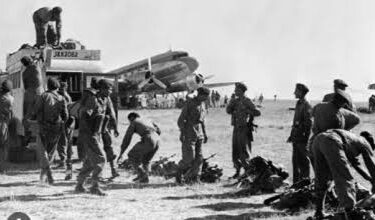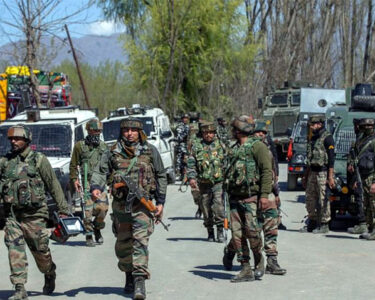

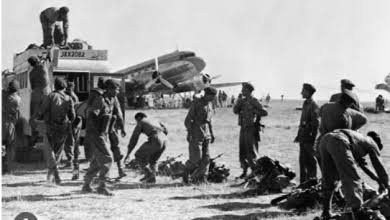
On the morning of October 27, 1947, the Government of India airlifted military troops into Srinagar, the capital of the princely state of Jammu and Kashmir. According to the official historical narrative promoted by the Indian state, this military deployment was a legal and defensive action. The official claim is that the region’s ruler, Maharaja Hari Singh, requested military assistance to defend his state against an invasion by tribal fighters from neighboring Pakistan, and that he legally merged his state with India before the troops landed.
However, a detailed and objective examination of the historical records, military logistics, legal documents, and the rules of the 1947 Partition reveals a very different reality. This comprehensive research report will demonstrate that the October 27 troop deployment was not a legitimate defense of a sovereign state, but rather a pre-planned military occupation of a disputed territory.
This report will prove this thesis by examining the following key areas:
- The rules of the 1947 Partition and how the invasion ignored demographic and geographic realities.
- The internal collapse of the Maharaja’s government due to the indigenous Poonch Rebellion, which stripped him of his legitimacy before the Indian army arrived.
- The systematic demographic engineering during the Jammu Massacres.
- The serious chronological and factual errors surrounding the “Instrument of Accession,” the legal document used to justify the invasion.
- The logistical impossibility of planning a massive military airlift in just a few hours, proving the deployment was planned well in advance.
- The conditional nature of the British and Indian acceptance of the accession, which promised a public vote that was never held.
- The violation of international law and United Nations Security Council resolutions.
By analyzing these historical facts, this report will establish that the presence of Indian troops in Jammu and Kashmir, which began on October 27, 1947, and continues to this day, meets the criteria of a military occupation rather than a legal defense