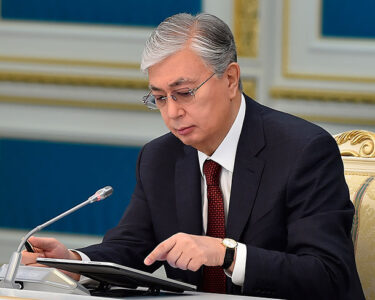

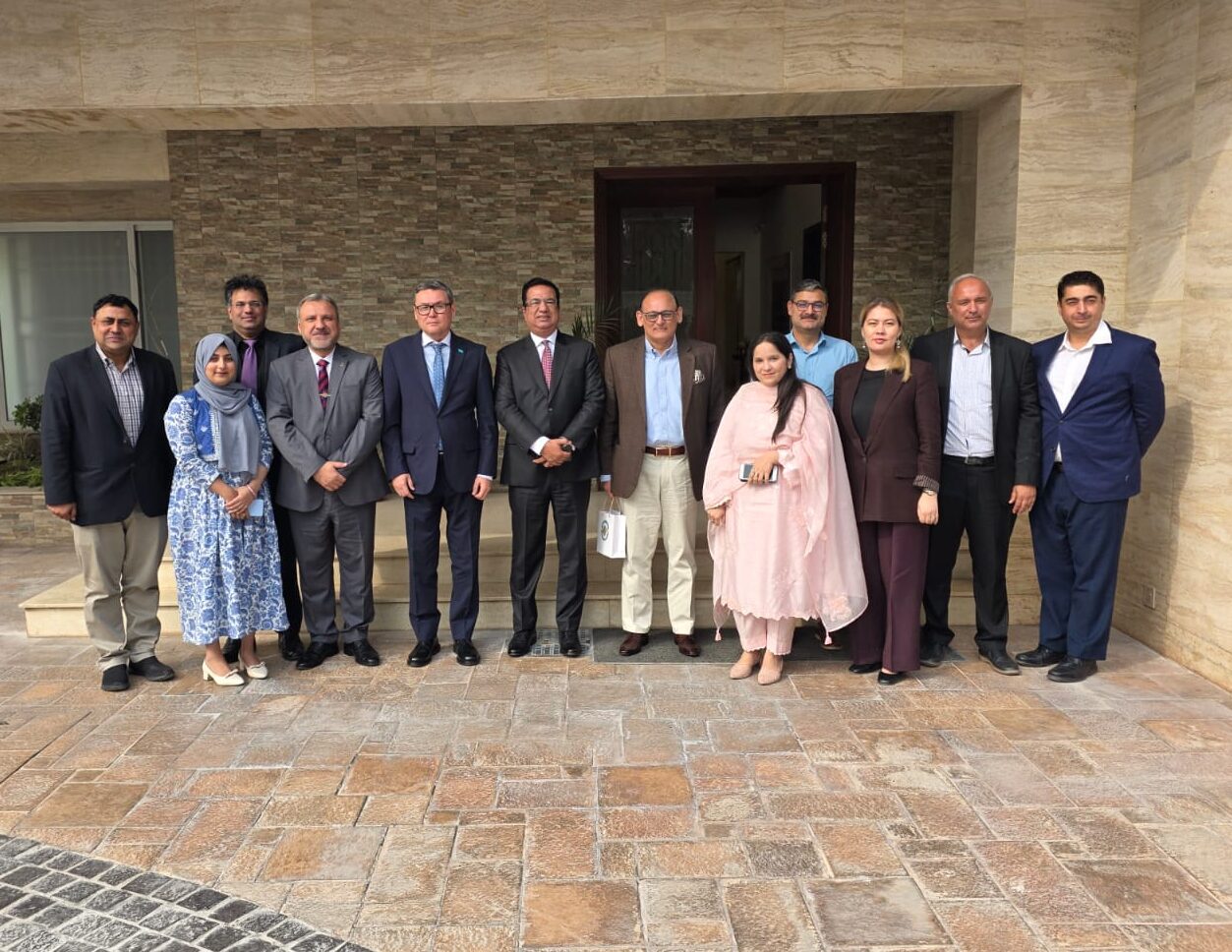
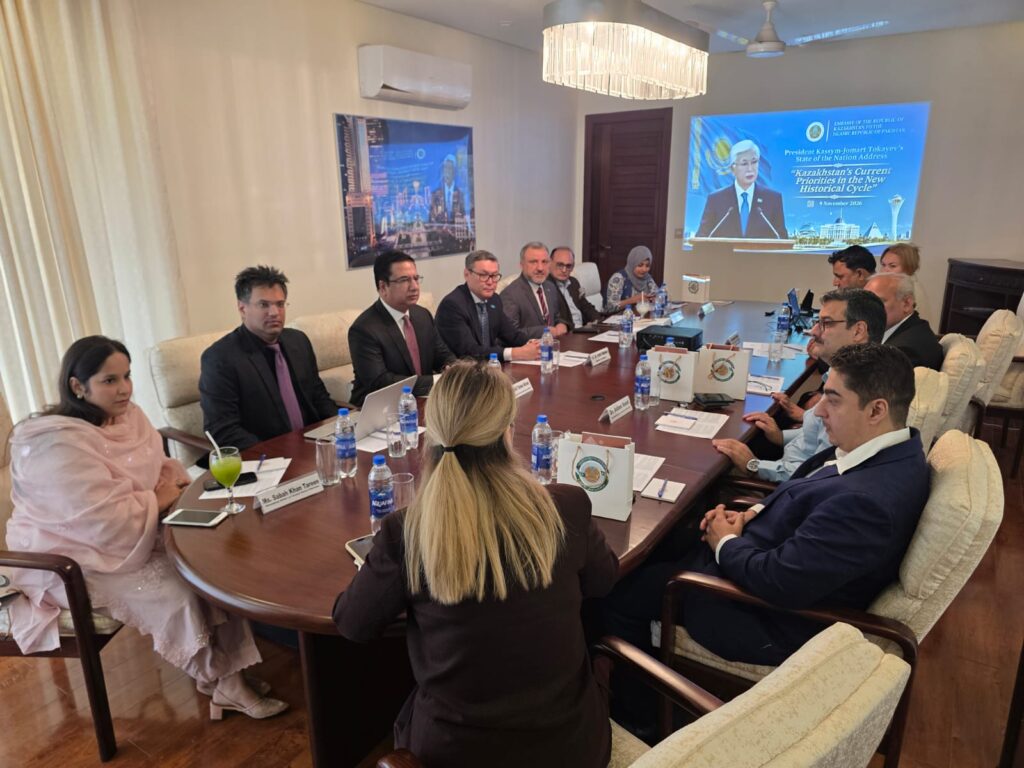
Islamabad: The Embassy of Kazakhstan to Pakistan hosted an expert meeting to discuss the key priorities of President Kassym-Jomart Tokayev’s State of the Nation Address, delivered on 28 October 2026, titled “Kazakhstan’s Current Priorities in a New Historical Cycle.”
The event brought together representatives of Pakistan’s leading think tanks, academic institutions and media outlets.
Ambassador of Kazakhstan H.E. Mr. Yerkin Tukumov briefed Pakistan’s experts and media community on the key priorities for Kazakhstan’s socio-economic and political development, as outlined by the Head of State. In his remarks, the Ambassador highlighted Kazakhstan’s significant achievements over 35 years of independence, emphasizing that the country has established itself as Central Asia’s largest economy, a major investment and transport and logistics hub in Eurasia, and a middle power pursuing a balanced and pragmatic foreign policy.
Particular attention was paid to the development of international transport and logistics corridors, including the CASA corridor, aimed at strengthening connectivity between Central and South Asia, expanding the region’s transit potential, and providing Kazakhstan with additional routes to Pakistan’s seaports.
During the discussion, Pakistani experts highly commended the strategic vision outlined in the President’s Address and the ongoing reforms in Kazakhstan.
In particular, Mr. Khalid Taimur Akram, Executive Director of the Pakistan Research Center for a Community with Shared Future and Editor-in-Chief of Daily Big Digit, proposed establishing a Kazakhstan-Pakistan “Research Corridor” to expand research cooperation, strengthen inter-university ties, and engage young people in joint projects as an important component of the two countries’ development strategies.
Dr. Irfan Shahzad Takalvi, President of the Eurasian Century Institute, welcomed the three-year moratorium on inspections of micro and small businesses announced by the President of Kazakhstan, highlighting its importance for stimulating entrepreneurship and economic growth. Drawing on Pakistan’s experience, he suggested that the measure could contribute to an increase of approximately 25% in Kazakhstan’s GDP over the next three years. Dr. Takalvi also emphasized the importance of strengthening regional transport connectivity, particularly through the transit route linking Khorgos, Khunjerab and Karachi, which could create additional opportunities for expanding trade between Kazakhstan and Pakistan and facilitating access to Central and South Asian markets.
Prof. Adam Saud of Bahria University highlighted Kazakhstan’s achievements in developing transport and logistics infrastructure and the prospects for regional integration, including the potential of the Shanghai Cooperation Organisation (SCO). He also drew attention to Kazakhstan’s strong economic performance, noting that the country’s projected GDP per capita of over USD 19,000 in 2026 reflects the effectiveness of its government policies.
For his part, Mr. Muhammad Zaman Bajwa highlighted opportunities for cooperation in artificial intelligence, energy and media, as well as the need to strengthen P2P ties. In this context, Mr. Zaman referred to Pakistan’s experience, noting that the country’s IT services exports reached USD 4.6 billion in the 2025-2026 fiscal year, underscoring the considerable potential for bilateral cooperation in the digital economy.
Notably, the event coincided with Allama Iqbal Day, a national holiday in Pakistan. On this occasion, the Ambassador extended his warm greetings to the people of Pakistan, highlighting the enduring relevance of the distinguished philosopher and poet’s ideas on education, enlightenment, and national progress.