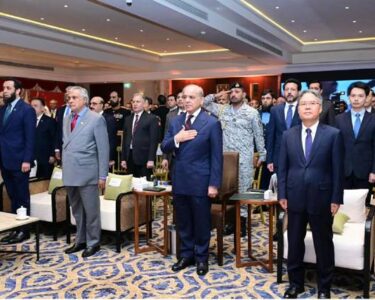


ISLAMABAD: A delegation of Jamaat-e-Islami led by its Ameer Hafiz Naeem-ur-Rehman called on Prime Minister Shehbaz Sharif in Islamabad on Tuesday. During the meeting, the prime minister thanked the delegation for choosing negotiations on petroleum product prices. The PM said he fully understands the burden on the public due to the increase in petroleum product prices.
Referring to the government’s relief on petroleum products to support low-income segments of society amid the recent regional situation, Shehbaz Sharif said the government is making all-out diplomatic efforts to resolve the regional crisis so the situation can return to normal.
The PM said the current crisis is not related to government policies, but is linked with the surge in oil prices in light of the regional and global situation. However, the government is providing relief to the public according to its financial capacity and will continue to do so in the future.
The PM briefed the delegation in detail about the relief measures in connection with petroleum products being given by the government to low-income groups. He informed the delegation that 12.7 million people have so far been registered under the relief scheme.
It was agreed in the meeting to constitute a committee comprising three members each from the government and Jamaat-e-Islami, which will present final recommendations on the measures, including enhancing the scope of the existing relief scheme on petrol so that the maximum number of deserving people can benefit from it.
Additionally, viable proposals should be prepared for gradual reduction of the petroleum levy as part of the budget. The prime minister nominated Deputy Prime Minister Ishaq Dar, Planning Minister Ahsan Iqbal, and Prime Minister’s Adviser Rana Sanaullah to represent the government in the committee.
The Jamaat-e-Islami delegation included Liaquat Baloch, Syed Firasat Shah, Nasrullah Randhawa, and Inayatullah.
Deputy Prime Minister and Foreign Minister Ishaq Dar, Minister for Planning Ahsan Iqbal, Minister for Economic Affairs Ahad Khan Cheema, Minister for Finance Muhammad Aurangzeb, Minister for Petroleum Ali Pervaiz Malik, Prime Minister’s Adviser on Political Affairs Rana Sanaullah, and Minister of State for Finance and Railways Bilal Azhar Kayani were also present in the meeting.
Meanwhile, the government and Jamaat-e-Islami agreed to constitute a committee to finalize proposals for expanding the Prime Minister’s Fuel Relief Scheme.
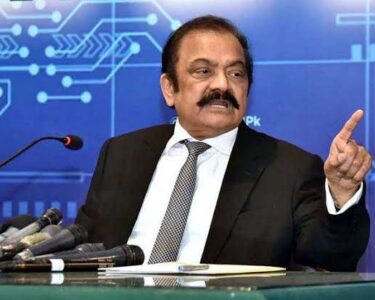
This was stated by Planning Minister Ahsan Iqbal while addressing a news conference alongside the Prime Minister’s Adviser, Rana Sanaullah Khan, in Islamabad.
Ahsan Iqbal said the understanding was reached during a meeting between Prime Minister Shehbaz Sharif and a Jamaat-e-Islami delegation led by its chief, Hafiz Naeem-ur-Rehman.
He said the committee will comprise six members, with three representatives each from the government and Jamaat-e-Islami. Deputy Prime Minister Ishaq Dar, Planning Minister Ahsan Iqbal, and Adviser on Political Affairs Rana Sanaullah Khan will represent the government.
he Planning Minister said the committee will consider expanding the scope of the petroleum relief scheme to provide further assistance to the public amid rising global oil prices.
He said the committee will also examine proposals for the gradual withdrawal of the petroleum levy in the next budget, keeping in view the country’s economic situation and the financial burden on the people.
Ahsan Iqbal highlighted that the government’s petroleum relief scheme is already benefiting more than ten million people. He stressed that political stability, national unity, and restraint are essential to overcoming the country’s economic challenges and ensuring the success of relief measures.
The Minister said the ongoing conflict involving Iran, the United States and Israel, coupled with regional tensions and disruptions around the Strait of Hormuz, has triggered a global energy crisis.
He added that the crisis has led to increases in oil and diesel prices, insurance premiums and transportation costs, besides disrupting gas supplies.