
By: Fuad Huseynzade
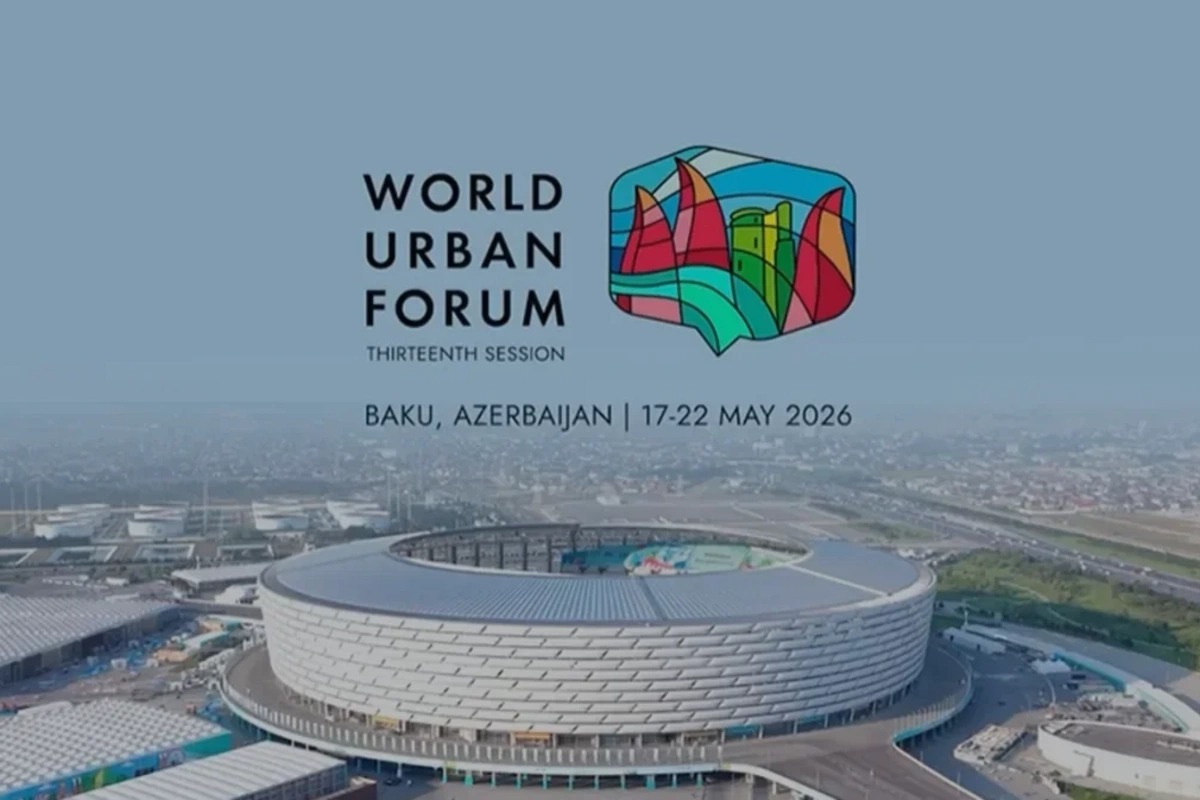
This month Baku is hosting a globally significant event – the 13th Session of the World Urban Forum (WUF13) of the United Nations. This forum is considered one of the most influential platforms in the world in the fields of urbanization, urban planning, and sustainable development. Organized by the UN Human Settlements Programme (UN-Habitat), the event is held every two years and brings together thousands of participants from different countries. The fact that the forum happning in Baku in 2026 is a clear example of Azerbaijan’s growing international reputation and its active participation in global initiatives. It will also go down in history as the first time such a high-level international forum is held in the Turkic world.
The main focus of WUF13 is on the theme “Housing the World: Safe and Sustainable Cities and Communities for All.” This topic is particularly relevant in the context of rapidly increasing urbanization in the modern world. Today, millions of people live in inadequate housing conditions, while social inequality, housing shortages, and environmental problems in cities are becoming increasingly acute. The forum aims to address these challenges, propose innovative approaches, and strengthen the exchange of experience between countries.
Baku’s selection as the host of this prestigious event is not accidental. In recent years, the city has undergone rapid development, transforming into a modern metropolis with advanced infrastructure while preserving its historical heritage. Large-scale urban renewal projects, improvements in the transport system, and the implementation of “smart city” and “smart village” concepts have turned Baku into one of the leading urban centers in the region. In this regard, WUF13 will also serve as an important platform to showcase Azerbaijan’s achievements in urban development to the world.
One of the key points to emphasize in this context is the declaration of 2026 as the “Year of Urban Planning and Architecture” in the Republic of Azerbaijan by President Ilham Aliyev. This decision reflects the high importance attached to urban planning and architecture in the country and aligns logically with the hosting of a global event such as WUF13.
Within the framework of this year, a number of large-scale projects are planned to be implemented in the country. These include the preparation of new urban development plans, acceleration of infrastructure projects in the regions, construction of modern residential complexes, and further improvement of the urban environment. In particular, the reconstruction and restoration work in the territories liberated from occupation is one of the most prominent examples of this policy. The application of “smart city” and “green energy” concepts in these areas reflects Azerbaijan’s innovative approach.
At the same time, expanding international cooperation is one of the priority directions within the “Year of Urban Planning and Architecture.” The involvement of foreign experts, organization of international forums and exhibitions, and exchange of experience will further increase the country’s potential in this field. WUF13 will serve as the pinnacle of this process, positioning Azerbaijan at the center of global urban development discussions.
The World Urban Forum 13 (WUF13), in Baku, is not only a global platform for dialogue on urbanization and sustainable development, but also an important event in terms of expanding Azerbaijan’s relations with the international community. In this context, the advocacy and promotional activities carried out by the Azerbaijani diaspora abroad are of particular significance.
Azerbaijani diaspora organizations are actively engaged in promoting WUF13 on an international scale. In conferences, seminars, exhibitions, and public discussions held in foreign countries, diaspora institutions emphasize the importance of Baku hosting this prestigious forum. Their activities are not limited to promotion alone; they also contribute to the establishment of international partnerships. By building connections with foreign NGOs, research institutes, and urban planning organizations, they help create new cooperation opportunities within the framework of the forum. In this sense, diaspora organizations act as a “bridge,” further strengthening ties between Azerbaijan and the international community.
WUF13 brings together a wide range of stakeholders, creating extensive opportunities for cooperation: state and government representatives, the United Nations and other international organizations, academic and research institutions, the private sector, non-governmental organizations, and youth. Through this platform, a shared vision for the future of cities is formed and practical solutions are discussed.
Within the framework of WUF13, foreign non-governmental organizations (NGOs) are enhancing the international dimension of the event. The participation of foreign NGOs also strengthens Azerbaijan’s international cooperation links and increases the global significance of the forum. It is worth noting that the State Agency for Non-Governmental Organizations Support of the Republic of Azerbaijan has identified international initiatives related to WUF13 as a priority direction in the 2026 grant competitions. Azerbaijani NGOs are playing an active role in the organization of the forum and in engaging participants.
Starting from May 11, the “Baku Urban Planning Week” has already begun. A series of events are planned in various locations across the city of Baku. The event will bring together government institutions, urban planning specialists, academic circles, cultural representatives, and young people. Throughout the week, conferences, panel discussions, innovation programs, thematic routes, and artistic events will be organized.
The aim of the project is to connect global urban planning discussions with Baku’s unique urban environment and to promote public participation. The events will cover historical sites, cultural heritage examples, and areas where modern urban planning solutions have been implemented. It should be noted that various events are being held in the country within this framework.
The participation of Azerbaijani NGOs also serves as a bridge between local and international communities, ensuring the exchange of practical solutions for sustainable urban development. The active involvement of both foreign and local NGOs transforms WUF13 from a purely intergovernmental platform into a multi-level platform for cooperation and knowledge exchange. This also enables the realization of one of the first large-scale initiatives in the field of urbanization and urban planning in the Turkic world.
Panel discussions, exhibitions, and round tables to be held within the forum will create opportunities to present innovative approaches in sustainable urban development, social inclusion, and urbanization. The participation of both foreign and local NGOs further enhances the practical and global significance of these discussions.
It should be noted that on May 12, President of the Republic of Azerbaijan Ilham Aliyev reviewed the ongoing preparations for the 13th Session of the World Urban Forum (WUF13). The Chairman of the State Committee on Urban Planning and Architecture, Anar Guliyev, and the Executive Director of the WUF13 Azerbaijan Operating Company, Adil Mammadov, informed the Head of State about the progress of the work.
It is also noted that the event venue covers a total operational area of 53 hectares around the Baku Olympic Stadium. Of this, 43 hectares are allocated for the main event area, while 10 hectares are designated for the main transport terminal and parking-transfer zone. Registration, sessions, exhibitions, media, transportation, technical support, volunteers, and venue services are organized as a unified operational system.
In general, WUF13, to be held in Baku in 2026, and the declaration of the same year as the “Year of Urban Planning and Architecture” are mutually reinforcing strategic initiatives. These events strengthen Azerbaijan’s ambitions for leadership in urban planning and architecture at both regional and global levels. In this process, Baku is acting not only as a host city but also as a successful model of modern urbanization.
Fuad Huseynzade, Chairman of the Public Association “Support for Journalists’ Diaspora Activities.