
Islamabad (TDV)The Economic Cooperation Organization (ECO) member states have reaffirmed their commitment to regional cooperation, economic connectivity and sustainable development, while expressing support for diplomatic efforts by Pakistan and Qatar to resolve the ongoing regional conflict.
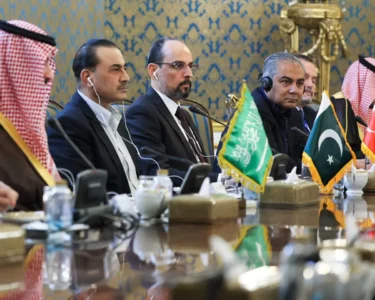
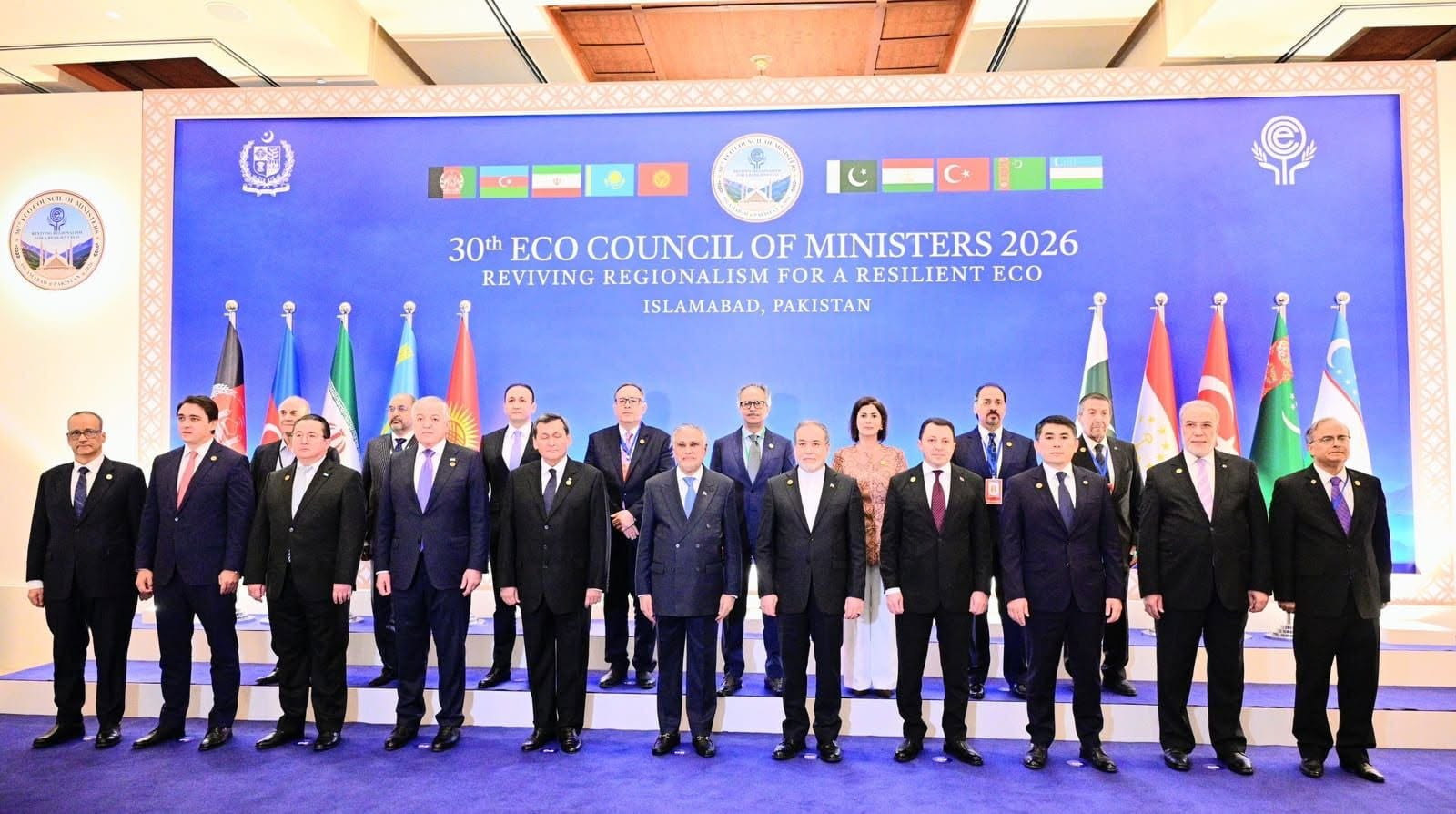
The commitments were outlined in the Islamabad Communiqué, adopted at the conclusion of the 30th Meeting of the ECO Council of Ministers in Islamabad on November 16. Deputy Prime Minister and Foreign Minister Mohammad Ishaq Dar chaired the meeting, which brought together foreign ministers and heads of delegations from ECO member states.
The meeting also adopted the Strategic Goals of Economic Cooperation 2026–2035, providing a framework for advancing regional integration, connectivity, resilience and sustainable prosperity over the next decade.
ECO Supports Pakistan and Qatar’s Diplomatic Efforts
The communiqué expressed concern over the challenging geopolitical situation and emphasized restraint, dialogue and diplomatic engagement as essential tools for resolving regional conflicts.
The ministers recognised Iran’s role as a founding ECO member and acknowledged its contributions to the organisation. They also expressed support for mediation efforts undertaken by Pakistan and Qatar, alongside a recent initiative put forward by Iran, aimed at achieving a dignified resolution and bringing about a complete and permanent end to the current war.
The meeting commended Pakistan’s diplomatic engagement during the recent Iran–United States crisis, including the Islamabad Peace Talks and the resulting Islamabad Memorandum of Understanding. It also appreciated Qatar’s role in facilitating international diplomacy.
The member states reaffirmed the importance of respecting international law, building mutual trust and pursuing peaceful solutions to disputes. They called for continued cooperation within the ECO framework to promote lasting peace and stability.
New Economic Cooperation Goals for 2035
The meeting adopted the Strategic Goals of Economic Cooperation 2026–2035, also referred to as ECO Vision 2035.
The framework builds on the organisation’s previous development agenda and aims to strengthen economic integration among member states. Its priorities include regional trade, investment, transport connectivity, energy cooperation, digital development and climate resilience.
The ministers also welcomed Pakistan’s assumption of the ECO chairmanship for 2026–2027 under the theme “Reviving Regionalism for a Resilient ECO.”
The new chairmanship provides an opportunity to strengthen regional partnerships and turn shared commitments into practical initiatives that support economic growth and development.
Member States Call for More Trade and Investment
The communiqué called on ECO members to take joint measures to attract foreign direct investment (FDI), establish free economic zones and develop joint manufacturing enterprises.
It also highlighted the importance of building regional value chains, supporting small and medium-sized enterprises (SMEs) and increasing export potential.
The ministers encouraged countries to promote domestic products in regional and international markets through joint trade exhibitions, investment forums and stronger business-to-business connections.
They also called for greater exchange of export-related information and expanded e-commerce to help businesses access new markets.
These measures are intended to strengthen commercial links among member states and create opportunities for businesses across the region.
ECO Trade Facilitation Agreement and Transit Connectivity
The meeting stressed the need to accelerate negotiations on the draft ECO Trade Facilitation Agreement.
It tasked the Joint Working Group with intensifying technical discussions to finalise the agreement and submit it for adoption. The proposed framework is expected to support smoother trade procedures and strengthen economic exchanges among member states.
The ministers also urged countries to fully implement the ECO Transit Transport Framework Agreement (TTFA).
Effective implementation of the agreement could improve cross-border transport, reduce trade barriers and strengthen regional supply chains. Better transport links would also help member states expand access to regional and international markets.
The broader connectivity agenda aligns with Pakistan’s stated priorities for its ECO chairmanship, which include improving transport corridors and strengthening trade links between Central Asia, South Asia and the Arabian Sea.
Regional Cooperation on Artificial Intelligence and Technology
The communiqué encouraged ECO members to deepen cooperation in artificial intelligence (AI) and other emerging technologies.
It called for exchanging experiences and best practices on national technology strategies, alongside joint capacity-building initiatives.
The ministers also emphasised the need for equal, fair, transparent and non-discriminatory access to global markets for information and communication technology (ICT) security products, technologies and services.
They highlighted the importance of improving access for developing countries, describing it as a confidence-building measure to address gaps in technological and security capabilities.
Clean Energy and Minerals Cooperation
The meeting welcomed the operationalisation of the ECO Clean Energy Centre in Baku, Azerbaijan, describing it as an important regional platform for supporting the transition towards sustainable energy.
The centre is expected to contribute to cooperation on industrial development, energy security and climate objectives across the ECO region.
Another major development was the adoption of the ECO Five-Year Roadmap on Minerals Cooperation for 2026–2030.
The roadmap provides a regional framework for cooperation in the minerals sector, including critical minerals required for advanced technologies and emerging industries. It is intended to strengthen coordination on the sustainable management and development of mineral resources.
ECO Members Stress Climate Action and Cultural Dialogue
The ministers reiterated the importance of stronger regional action to address climate change, including adaptation measures, combating desertification and reducing greenhouse gas emissions.
They also stressed that all member states should collectively adopt and implement ECO agreements and frameworks. Consistent implementation, they said, is necessary to strengthen institutional cooperation and achieve the organisation’s shared development objectives.
The communiqué further reaffirmed the member states’ commitment to promoting inter-religious dialogue and intercultural understanding as important foundations for international peace and stability.
Pakistan’s ECO Chairmanship Focuses on Regional Integration
The Islamabad meeting marked an important step in Pakistan’s 2026–2027 ECO chairmanship, with regional connectivity, trade, investment and sustainable development among its central priorities.
Pakistan has emphasised its geographical position as a potential regional connectivity hub, with transport and trade corridors linking Central Asia and other landlocked member states to international markets.
The adoption of the Islamabad Communiqué and the Strategic Goals of Economic Cooperation 2026–2035 provides a shared framework for pursuing these objectives.
However, translating the commitments into practical results will depend on continued negotiations, implementation of existing agreements, and coordinated action by all member states