
News Desk:
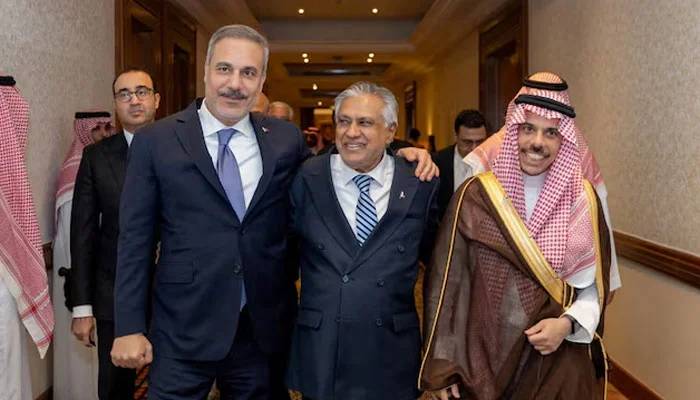
ANKARA: Makkah defence pact would require Pakistan, Saudi Arabia and Turkiye to help defend one another for at least 10 years, according to the previously undisclosed full text obtained and published Tuesday by Middle East Eye, media reported.
The three governments announced the Makkah Joint Defence Agreement when they signed it in Saudi Arabia on August 7, but had not made its full text public.
The 10-year restriction on withdrawal emerged from the text published by Middle East Eye as Turkiye’s government submitted the agreement to parliament for approval on Tuesday.
The agreement has no expiration date, and members would be allowed to withdraw only after its first 10 years, with at least three months’ written notice to the other partners. “Any ‘Party’ may withdraw from this Agreement after 10 years have elapsed from its entry into force, by giving the other “Parties” written notification of its intention to withdraw through diplomatic channels at least three months in advance,” the agreement says.
Activities and projects agreed before a country’s withdrawal would continue, along with obligations to protect classified information.
The parliamentary submission follows an October 5 meeting in the Saudi capital of Riyadh at which the three governments agreed to implement their collective defence commitments and arrange the deployment of military forces and capabilities to Saudi Arabia, subject to each country’s laws.
The agreement’s first article says the parties shall use “all necessary means” to eliminate threats to one another’s territorial integrity, sovereignty or internationally recognised borders, according to a text seen by Reuters.
“In the event one of the parties is subjected to an armed attack or military aggression by another country or group of countries, the parties shall immediately provide assistance to the party under attack, utilising the full range of mutual assistance measures available to them,” Article 2 of the agreement says.
The provision, similar to Nato’s Article 5, refers to Article 51 of the UN Charter, which covers the individual or collective right of states to self-defence against armed attack.
The three countries “will decide on the scope and nature of the support to be provided following an objective assessment of the assistance required” and will cooperate within their available resources, including military capabilities and resources, the same article says.
Turkiye, which has a robust defence industry, has condemned Houthi attacks on Saudi Arabia, expressed willingness to help meet Riyadh’s military technology needs and agreed to join a Saudi-led coalition to ensure navigational safety in the Red Sea.
The agreement also envisages close cooperation on defence industry, intelligence sharing, logistical support and the fight against “all means of terrorism,” including at the operational level. Parliamentary ratification is required for Turkiye to formally approve the agreement.
Parliament Speaker Numan Kurtulmus, currently visiting Kyrgyzstan, will refer the agreement to parliament’s foreign affairs commission upon his return, two of the sources said. The contents and details of the agreement are expected to become public once it is submitted to the commission. The commission could debate the agreement as early as Friday, another source said.
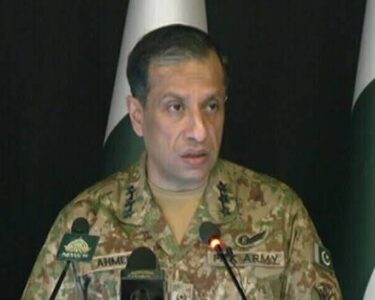
Meanwhile, Chief of Army Staff and Chief of Defence Forces Field Marshal Asim Munir on Tuesday travelled to Tehran, met with Iranian leadership and discussed regionalization, according to the ISPR
Shakeel Anjum adds: Federal Interior Minister Mohsin Naqvi met his Qatari counterpart, Sheikh Khalifa bin Hamad bin Khalifa Al Thani, who also commands Qatar’s Internal Security Force (Lekhwiya), to discuss ways to enhance bilateral cooperation in internal security, a spokesman of the Ministry of Interior said Tuesday.
During the meeting in Doha, the two interior ministers held detailed discussions on expanding cooperation in various fields related to internal security and agreed to strengthen their security partnership. They also exchanged views on the prevailing regional situation and matters concerning peace and stability in the region. Both sides reaffirmed their commitment to further consolidating cooperation between their respective interior ministries.
Speaking during the meeting, Mohsin Naqvi said Pakistan and Qatar were working together to promote regional peace and stability.
The Qatari interior minister said his country attached great importance to its relations with Pakistan, underscoring the significance of bilateral ties and continued cooperation between the two countries.