
By:Abdul Malik Junejo
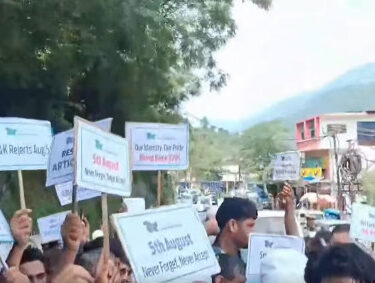
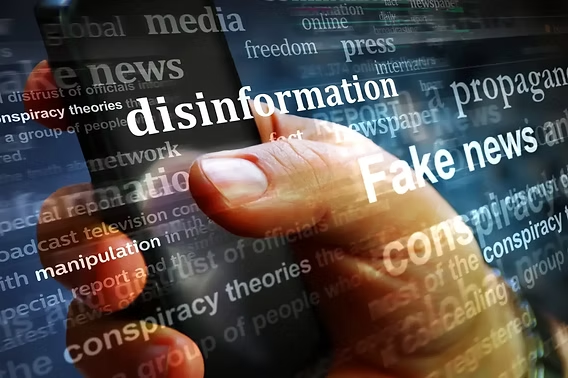
Disinformation generally refers to false or misleading information that is deliberately spread to shape public opinion or serve political agendas. The growing challenge of disinformation, particularly following the emergence of Artificial Intelligence (AI), has had a significant influence on young people. Its rapid spread has emerged as a major challenge, particularly in politically contested regions where competing narratives shape public opinion. In the context of IIOJK, digital platforms have become one of the primary sources of news and political information for many young people. Disinformation can have a significant negative impact on how Kashmiri youth shape their public opinion, identity, and political agency. The Indian media has contributed to an environment in which perceptions of Pakistan and the Kashmir conflict are shaped through particular political narratives.
Each state uses its media to promote its policies or advance its national interests, and a similar pattern can be observed in IIOJK. India portrays different events according to its national interests. This is not limited to state broadcasters. Smaller digital outlets, partisan social media pages, and even coordinated troll accounts add to the noise, each promoting its own version of events. A Columbia Journalism Review analysis of recent India-Pakistan tensions noted how false claims and old, unrelated video clips spread rapidly online before official statements could catch up, moving from platforms such as X to WhatsApp, which is widely used across South Asia (CJR, 2025). Things become even more difficult during periods of unrest, when internet shutdowns and curfews restrict access to verified news. In such an information vacuum, rumors can travel faster than verified facts, and by the time official statements are issued, the effects of misinformation may already have spread. For young people in IIOJK who obtain much of their information through their phones, this is not simply an occasional distortion; it can become part of the wider information environment through which they try to understand their own reality.
For many young people growing up in IIOJK, the smartphone serves as the primary, and often sole, window to the outside world, making them particularly vulnerable to misinformation and propaganda. Years of exposure to conflicting reports, unverified videos, and fabricated content can make it difficult to determine whom or what to trust. A Human Rights Watch study cites a Kashmiri journalist who noted that communication blackouts confine people to a restricted information environment where rumors flourish unchecked because there are limited means to verify what is actually happening. As a result, some young people may withdraw from news altogether, exhausted by the constant effort to distinguish truth from falsehood. Conversely, others may gravitate towards narratives that align with their existing views or emotions, regardless of whether those narratives are grounded in verified information. According to a 2025 report highlighting mental health concerns in the region, Kashmiri youth are living through an “infodemic”, a landscape in which authentic information and misinformation coexist, making it increasingly difficult to distinguish between them at first glance (Greater Kashmir, 2025). When mobile internet remained largely suspended for over 500 days following the abrogation of Articles 370 and 35A, a generation experienced prolonged restrictions on access to information. The issue is not merely that Kashmiri youth may fall victim to a particular falsehood; the broader challenge is that they inhabit a media landscape in which news is frequently presented through political or ideological lenses, making it increasingly difficult to distinguish verified information from competing narratives.
Social media has provided Kashmiri youth with a medium that was largely unavailable to their parents’ generation. They can now communicate their experiences to the wider world, document their observations, and, without seeking permission from traditional media institutions, question official narratives or present alternative viewpoints (Digital Activism: A Case Study of Kashmir). However, this freedom also comes with significant challenges. Various reports indicate that organised online campaigns, sometimes referred to as “IT Cells”, attempt to flood social media platforms with content supporting the government’s position or seek to have critical voices removed through coordinated reporting (Stand With Kashmir). Thus, the same digital platforms that provide Kashmiri youth with opportunities to raise their voices can also be used to restrict or suppress those voices. In such a context, political expression is no longer merely a question of whether an individual is permitted to speak; it is also a question of whether, within a highly contested and contradictory information environment, that voice can actually reach others.
There is no easy solution to a problem as complex as this. Media literacy is often presented as one important response: teaching people to slow down, examine the source of information, verify claims, and, where necessary, use tools such as reverse-image searches before sharing content. However, even these measures have limitations. Fact-checking organisations are also playing an important role. According to a 2025 study, nearly half of the organisations associated with the International Fact-Checking Network now run some form of media-literacy programme alongside their fact-checking activities (PMC, 2025).
AI, although part of the problem, has also increasingly become part of the response. It is now easier than ever to create fabricated videos, clone voices, or generate realistic images. At the same time, technological developments have produced tools that can help identify manipulated content, including inconsistencies in audio, images, and other digital material that may be difficult for the human eye to detect. Journalists and media organisations are increasingly exploring such tools as part of the verification process (Resemble AI, 2026; CloudSEK, 2026).
In IIOJK, disinformation is not merely background noise; it has become part of the information environment in which many young people experience the conflict. It can influence their understanding of events around them, their sense of identity, and their willingness to speak about their experiences. At the same time, the mobile phones and digital platforms that facilitate the spread of half-truths and misinformation have also provided Kashmiri youth with opportunities to respond. They can record what they witness, document their experiences, and share their perspectives with audiences beyond the region, although these voices may be overwhelmed by the greater reach and resources available to competing narratives.
At the same time, the challenges created by the intersection of Artificial Intelligence and disinformation are becoming increasingly complex, but so too are the tools available to address them. Part of the response lies in more effective fact-checking, greater accountability from social media platforms regarding their policies and decisions, and stronger mechanisms for identifying AI-generated and manipulated content. None of this will resolve these problems overnight, but it clearly indicates that withdrawing from the information environment in which Kashmiri youth are forced to live is not the answer. What is needed is a more reliable, open, and authentic information space in which Kashmiri youth can put forward their experiences, express their views, and make their voices heard.
About the Author: Abdul Malik Junejo is a Junior Research Fellow at Youth Forum for Kashmir (YFK).