
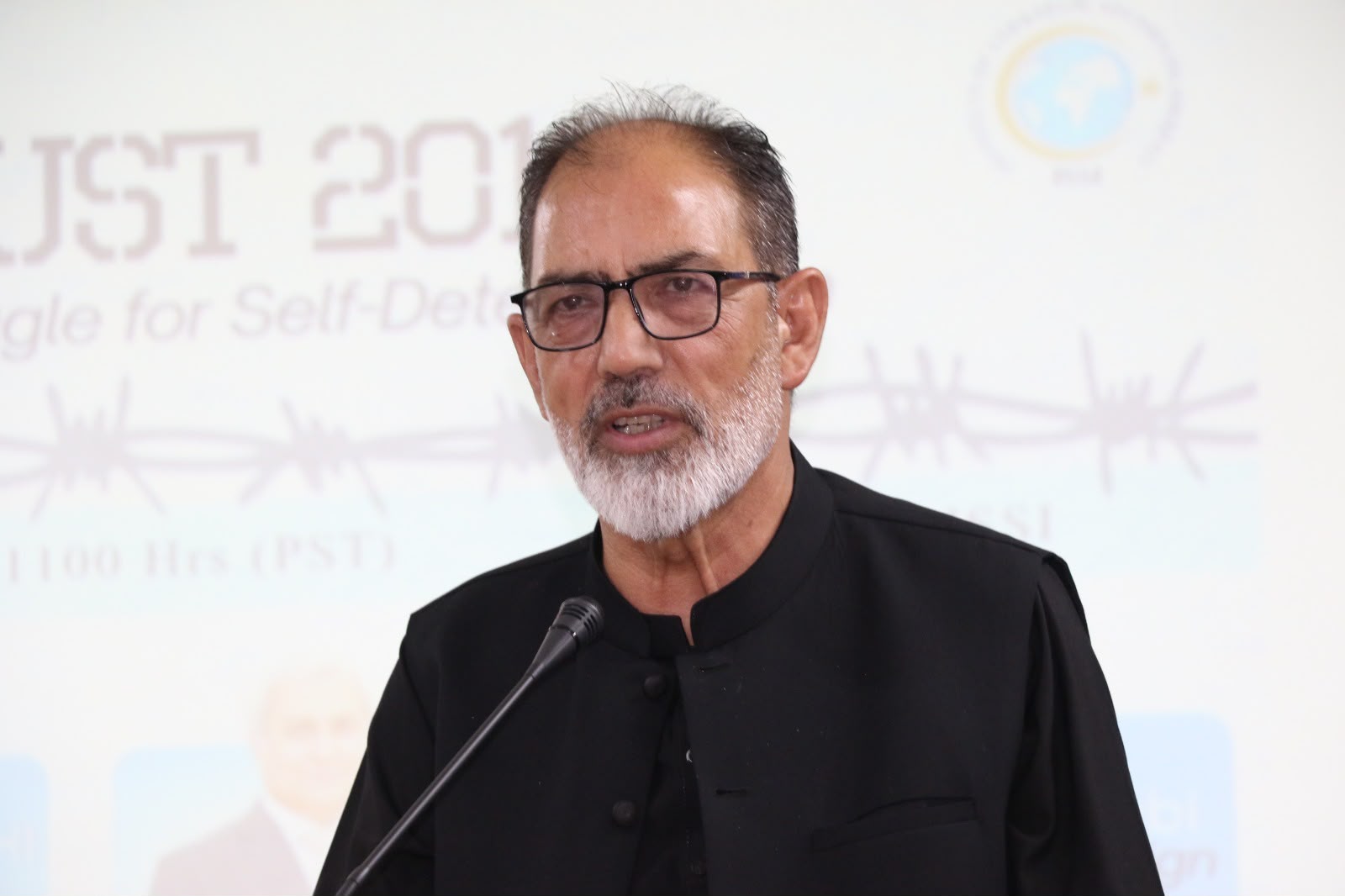
Altaf Hussain Wani
For decades, the international community has been asked to view the situation in Jammu and Kashmir through the lens of “stability” and “democratic progress.” We are told that elections are the antidote to unrest, that the ballot box is the ultimate expression of will. But for those of us who have spent a lifetime advocating for the fundamental right to self-determination, these elections are not milestones of liberation. They are the gears of a sophisticated machine of political engineering designed to mask an illegal occupation with a veneer of legitimacy.
The tragedy of Kashmir is not a failure of leadership, but a deliberate dismantling of it. Since the ceasefire through UN intervention, the Indian state has operated on a singular, cynical premise: that the aspirations of the Kashmiri people can be managed, diluted, and eventually erased through a process I call the “Carousel of Control.”
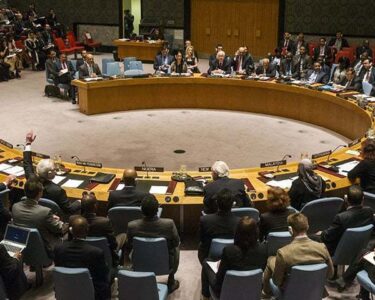
To understand this engineering, one must look at the gap between the promise of the UN resolutions—which guaranteed a free and impartial plebiscite—and the reality of the administrative grip tightened by New Delhi. The “carousel” functions by offering the illusion of choice while ensuring the outcome remains unchanged. It is a cycle where local leaders rise on the wave of popular sentiment, only to be systematically broken by the center.
We saw this in 1953 with the betrayal and detention of Sheikh Abdullah. We saw it again in 1987, when the blatant rigging of the assembly elections didn’t just steal a vote; it stole the faith of a generation. When the state engineers the outcome of a democratic exercise, it does not create stability; it creates a vacuum of trust. That vacuum was filled by the insurgency of 1989, a direct consequence of the realization that the “democratic” path was a dead end.
The pattern is predictable: the center allows a degree of regional autonomy only as long as that autonomy does not challenge the core of the occupation. The moment a leader dares to articulate the genuine desire for self-determination or seeks to protect the indigenous identity of the land, the machinery of the state pivots from “partnership” to “punishment.” The leader is either co-opted into a puppet administration or discarded into a prison cell.
The culmination of this engineering arrived in August 2019. The revocation of Article 370 and 35A was not a “reform” for integration; it was the final demolition of the political bridge between the Kashmiri people and the Indian state. By removing the special status of the region while it was under President’s Rule—without a single elected representative present—New Delhi signaled that the “carousel” was no longer even pretending to be democratic. The message was clear: your consent is not required for your erasure.
From the perspective of self-determination, the current push for “normalcy” and new elections is the most dangerous phase of this engineering. The Indian government seeks to use elections as a tool of “normalization,” hoping that the act of voting will be interpreted by the world as a tacit acceptance of the current status quo. But voting for a municipal council or a legislative assembly is not the same as deciding the sovereignty of a nation. One is an exercise in administration; the other is an exercise in human rights.
The human cost of this political game is staggering. When the state replaces genuine political agency with “development packages,” it treats the Kashmiri people as subjects to be managed rather than citizens with a right to decide their own destiny. The psychological toll of this deception—the distance between the campaign promise and the reality of the security boot—has left a scar of profound alienation.
True accountability cannot be achieved through a tweak in the electoral process or the appointment of a more “empathetic” governor. It requires a fundamental shift in the paradigm. We must stop pretending that “representative government” within the framework of an occupation is a substitute for the right to self-determination.
As long as the boundaries of political action are drawn by a military headquarters in New Delhi rather than the people of Srinagar, Jammu, and Leh, the carousel will continue to spin. The faces in the government offices will change, but the power will remain concentrated in the hands of those who view Kashmir as a territory to be held rather than a people to be heard.
The path forward is not through more engineered elections, but through the fulfillment of the promises made by the international community decades ago. The people of Jammu and Kashmir do not need another set of puppets; they need the dignity of a choice. Until the right to self-determination is recognized not as a “dispute” to be managed, but as a right to be granted, the ballot box in Kashmir will remain a tool of control, not a vehicle for freedom.