
By Altaf Hussain Wani
The Jammu Massacre of 1947 should not be reduced to a disputed footnote in the history of Partition. It was a devastating episode of organised violence that shattered communities, transformed the region’s demography and left families divided for generations. Yet it is often pushed to the margins of competing accounts centred on accession, war and territorial control.
In the autumn of 1947, Muslims in parts of Jammu were killed, raped, abducted and driven from their homes. Villages were emptied, refugee convoys came under attack, and survivors fled towards Sialkot, other parts of Pakistan and what later became Azad Jammu and Kashmir. Nearly 300,000 to 500,000 Muslims were forced to flee to flee the region. The number of people killed remains contested. Christopher Snedden offers cautious estimates to 100,000; other accounts put the toll considerably higher. The British news papers Times put the toll to 237000. But disagreement over the number is no reason to deny the massacre. Accounts by Horace Alexander and Ian Stephens, the later testimony of late Ved Bhasin the founder and chief editor of English daily Kashmir times, survivor recollections and subsequent historical research describe violence on a scale that cannot be explained as spontaneous communal rioting. Together, they point to organised killings, forced displacement and the involvement—or failure to act—of parts of the Dogra state apparatus.
Responsibility begins with the government of Maharaja Hari Singh. His administration had a duty to protect all its subjects, regardless of religion. Yet historical accounts describe Muslims being disarmed while Hindu and Sikh groups obtained weapons; state troops taking part in attacks; and officials failing to protect vulnerable communities and refugee convoys. At the very least, this was a grave failure of government. Substantial testimony supports the more serious charge of active collusion.
The violence cannot be understood as a local eruption of hatred alone. Survivor testimony and historical studies point to the involvement of Hindu and Sikh armed groups, including RSS-linked activists, Sikh jathas and armed men who came from outside the princely state. Their numbers, coordination and chains of command remain uncertain and require further investigation. But uncertainty about the details does not absolve those involved. Violence on this scale required weapons, mobility and organisation—and the belief that those responsible would face no consequences.
That distinction matters. Responsibility belongs to the perpetrators and the institutions that enabled them, not to Hindus or Sikhs as whole communities. Nor does recognising what happened in Jammu mean ignoring atrocities against Hindus, Sikhs and Muslims elsewhere during Partition. Historical honesty is not a contest over whose suffering counts. It means refusing to decide that some victims deserve remembrance and others do not.
The demographic consequences were profound. In the 1941 census, Muslims made up about 61 per cent of Jammu province’s population. Mass killing, flight and the later division of the princely state transformed that landscape. In the areas that came under Indian occupation , Muslims became a minority. Homes, neighbourhoods and community ties built over generations were broken apart. This was not an ordinary change in population figures. It was a rupture caused by terror and exodus, then entrenched by the ceasefire line and, later, the Line of Control.
Any account of the Kashmir conflict that begins with the arrival of Indian troops on 27 October 1947 or the tribal intervention, leaves out a crucial part of the story. By then, Muslims in Jammu had already faced dispossession, repression and mounting communal violence. The massacre helped turn the dispute over Kashmir’s future into an enduring reality of dispossession and separation.
Its effects have never disappeared. Refugees and their descendants in Pakistan and Azad Jammu and Kashmir inherited lost homes, unresolved property claims, fragmented family histories and graves they could rarely visit. Families divided by the Line of Control have lived for decades with restricted movement. Military escalation has brought shelling, displacement and renewed fear. In Jammu, Muslim families and their descendants continue to carry memories shaped by loss and vulnerability. Across the divided state, civilians still bear the cost of decisions in which they had little say.
Justice must begin with evidence, not inflammatory arithmetic. India, Pakistan and the administration in Azad Jammu and Kashmir should support independent archival research, preserve testimony, document massacre sites and examine records concerning state forces, armed groups and confiscated property. Political discomfort is no reason to keep the archives closed.
No commission can bring back the dead or reunite every divided family. But a truthful investigation can challenge the impunity that thrives when history is suppressed. Jammu’s victims deserve neither exaggeration nor erasure. They deserve to be recognised. And the people of Jammu and Kashmir—displaced, divided and still living with the consequences—deserve a future in which their lives are no longer treated as expendable in an unresolved territorial conflict.
About the Author:
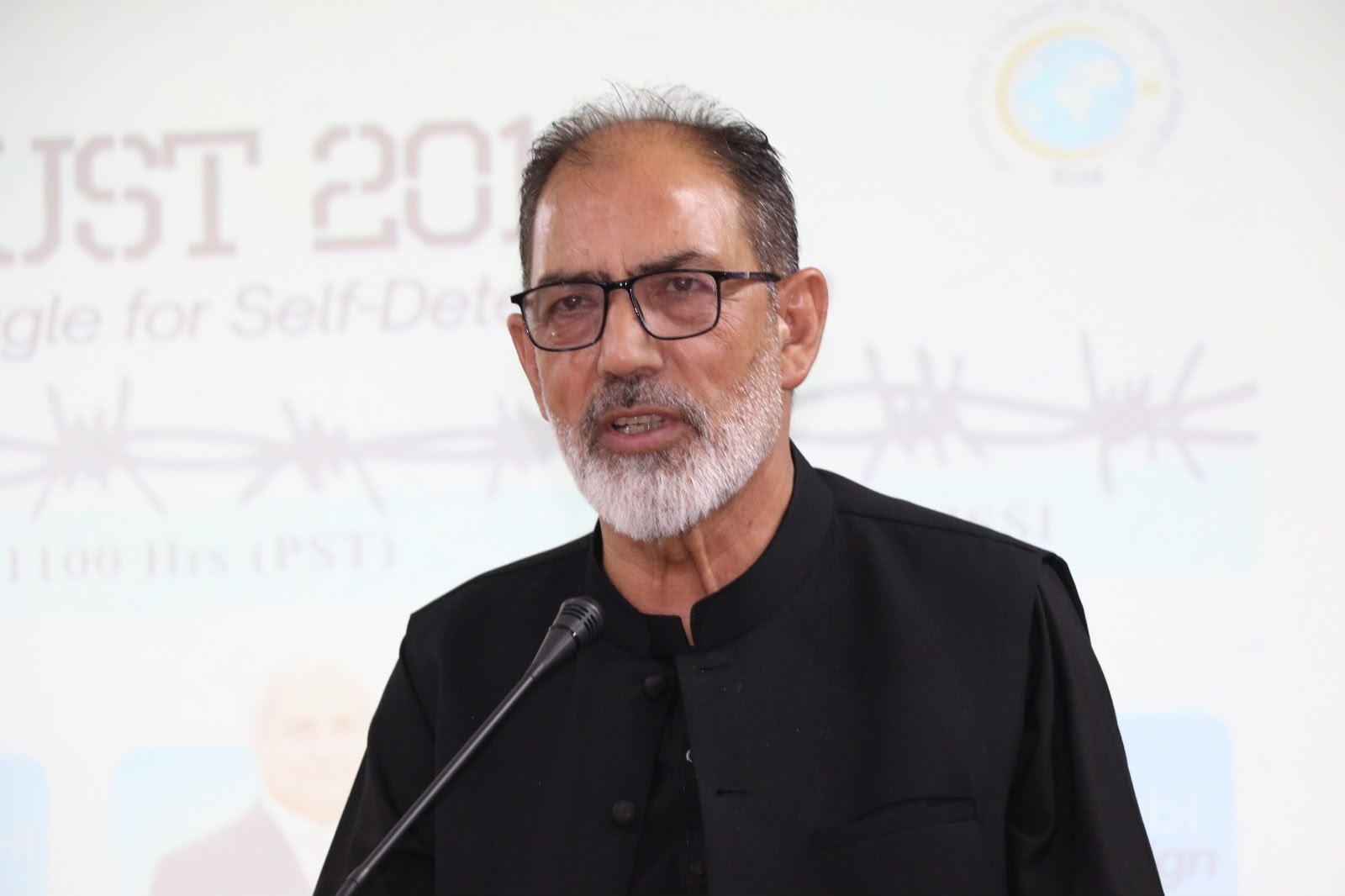
Altaf Hussain Wani is the Chairman of the Kashmir Institute of International Relations (KIIR), specializing in the analysis of Kashmir politics, policy, and international advocacy. He can be reached on X at @sultan1913 or via email at saleeemwani@hotmail.com.