
By: Agha Aghayev/ Fuad Huseynzadeh
Azerbaijani architecture reflects a unity of rich traditions, diverse cultural influences, and historical stages that have developed over millennia. This architectural heritage has evolved from ancient times through the Middle Ages, the modern era, and into the present day, preserving its uniqueness.
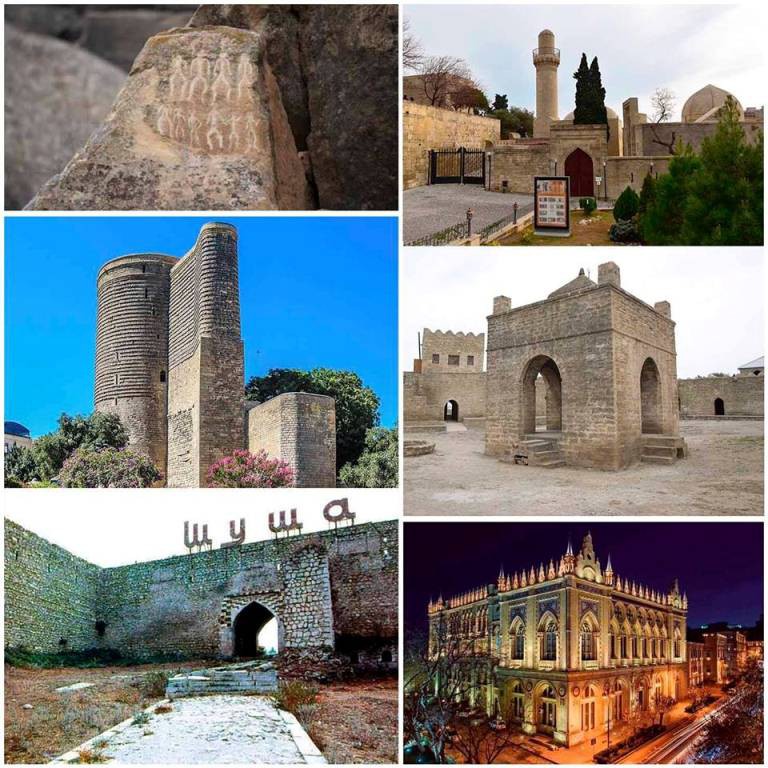
The earliest examples of architecture in Azerbaijan date back to the primitive communal period. During this time, people mainly lived in natural caves and simple structures. One of the most famous examples is the Azikh Cave. This cave is significant not only as a dwelling place but also for studying the lifestyle of ancient humans. In later stages, defensive structures and early settlements began to emerge. The Gobustan rock carvings, rich in petroglyphs, combine elements of art as well as traces of early architecture and settlement culture.
The Middle Ages are considered one of the most brilliant periods of Azerbaijani architecture. During this time, urban planning, the construction of fortresses and palaces, and religious architecture developed extensively. In particular, the Shirvanshahs’ Palace complex is one of the masterpieces of Azerbaijani architecture. Dating back to the 15th century, this complex consists of a palace, mosque, mausoleum, and other structures, representing a high level of craftsmanship. Another important monument is the Maiden Tower. Although there are different opinions about its function, it is believed to have been used for defensive or religious purposes. Today, the Maiden Tower is one of the symbols of Baku. Mausoleums also occupy an important place in medieval architecture. For example, the Momine Khatun Mausoleum, built in the 12th century, reflects the architectural style of the Atabegs period. Its decorations widely feature geometric ornaments and Kufic inscriptions.
In the 19th century, Azerbaijan’s incorporation into the Russian Empire led to the emergence of new architectural styles. During this period, European architectural traditions were combined with local styles, resulting in new types of buildings. With the development of the oil industry in Baku, many magnificent buildings were constructed. One of the most notable examples of this period is the Ismailiyya building. Built in the Gothic style, this building was commissioned by the philanthropist Haji Zeynalabdin Taghiyev and remains one of the architectural gems of the city. At the same time, classical European styles such as Baroque, Neoclassicism, and Eclecticism were widely used in residential buildings.
In the 20th century, during the Soviet period, architecture developed in accordance with socialist ideology. Monumental buildings, wide avenues, and typical residential complexes were constructed. Functionality and simplicity were emphasized, although in some cases national ornaments were preserved. Administrative buildings, cultural palaces, and residential districts built in Baku reflect the main characteristics of this period. Constructivism and later Stalinist architecture became dominant styles.
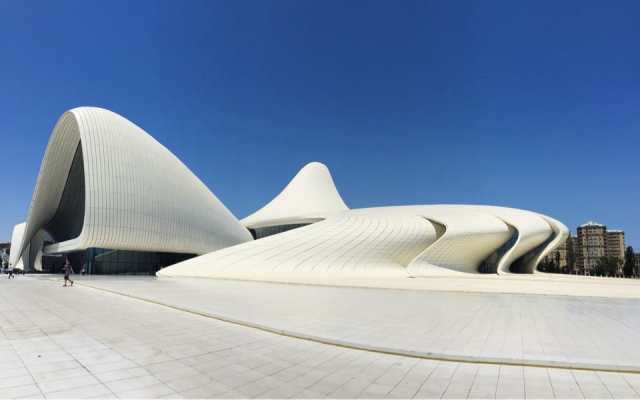
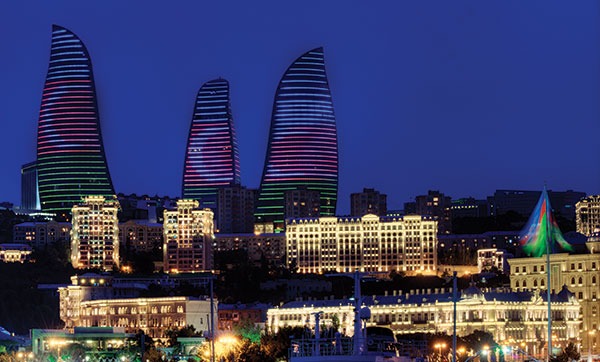
During the period of independence, Azerbaijani architecture has entered a new stage of development. Baku, in particular, stands out with its modern architectural examples. In this period, innovative designs, advanced technologies, and futuristic forms have been widely applied. One of the most outstanding examples of modern architecture is the Heydar Aliyev Center. Designed by the renowned architect Zaha Hadid, this building holds a special place in world architecture with its fluid forms and unique design. Another important project is the Flame Towers complex. These towers have become a modern symbol of Azerbaijan and have completely transformed the city’s skyline.
The protection of monuments in Azerbaijan is one of the key directions of state policy and holds particular importance both for preserving national identity and for integration into the international cultural heritage system. The approach to historical and cultural heritage in the country is regulated through legal, institutional, and practical mechanisms. The protection of monuments in Azerbaijan is primarily carried out on the basis of legislation. One of the main documents in this field is the law “On the Protection of Historical and Cultural Monuments.” This law defines the legal framework for the registration, protection, restoration, and use of monuments. State policy is also aligned with international conventions to which Azerbaijan is a party. Cooperation with UNESCO plays a particularly important role in this area. Several Azerbaijani monuments have been included in the UNESCO World Heritage List, which strengthens their protection at the international level.
The main state body responsible for the protection of monuments is the Ministry of Culture of the Republic of Azerbaijan. The Ministry oversees the inventory, restoration, monitoring, and use of monuments. In addition, specialized institutions such as the Icherisheher State Historical-Architectural Reserve Administration are engaged in the protection and management of monuments located in specific areas. Such reserves ensure the comprehensive preservation of monuments.
One of the main directions of state policy is the restoration and conservation of monuments. Historical buildings are restored using modern technologies and scientific methods, while their original appearance is preserved as much as possible. For example, monuments such as the Shirvanshahs’ Palace and the Maiden Tower are regularly subject to restoration and conservation work. These efforts are carried out with the participation of both local specialists and international experts.
Azerbaijan actively cooperates with international organizations in the field of monument preservation. In addition to UNESCO, joint projects are carried out with other cultural heritage organizations. This cooperation is important in terms of exchange of experience, financial support, and technical assistance. The policy of monument preservation is not limited to their protection alone, but also предусматривает their sustainable use. Historical monuments are transformed into tourist attractions and contribute to economic development. However, preserving the authenticity of monuments remains a fundamental principle in this process. For example, Icherisheher is both a protected historical area and one of the most visited tourist destinations.
Every year, April 18 – the International Day for Monuments and Sites – is celebrated in Azerbaijan. This day aims to draw attention to the preservation of historical and cultural heritage worldwide and was established in 1983 by UNESCO and ICOMOS. In Azerbaijan, this day is marked at the state level and with public participation through various events. The Ministry of Culture of the Republic of Azerbaijan and other institutions organize conferences, exhibitions, scientific seminars, and open house events. The main goal of these activities is to raise public awareness about the importance of preserving historical monuments.
On this occasion, on April 18, an exhibition titled “SI: 43 Moments of Life” by NGO chairwoman Mahsati Huseynova was held at the Baku Khatai Art Center. The works presented at the exhibition are based on real and natural photographs taken by the author in various locations. These images are reprocessed using artificial intelligence technologies and transformed into an oil painting aesthetic. A subtle and profound aesthetic dialogue emerges between the documentary truth of photography and the poetic language of painting. In these works, the image is not just a depiction — it is memory.

Each frame carries a fragment of time, an emotion, and the spirit of a place. Through the intervention of technology, the photograph is seemingly reborn and comes alive before the viewer like a painting created by a brush.
Azerbaijani architecture has undergone a rich and multifaceted development path from ancient times to the modern era. Formed under the influence of both Eastern and Western cultures, it has created its own unique style. Historical monuments and modern buildings together reflect Azerbaijan’s cultural heritage and development. In this sense, Azerbaijani architecture is not only a national treasure but also an important part of world culture.
Chairman of the German-Azerbaijani Cultural House, Agha Aghayev,
Chairman of the Public Union “Support to Journalists in Diaspora Activities,” Fuad Huseynzadeh